
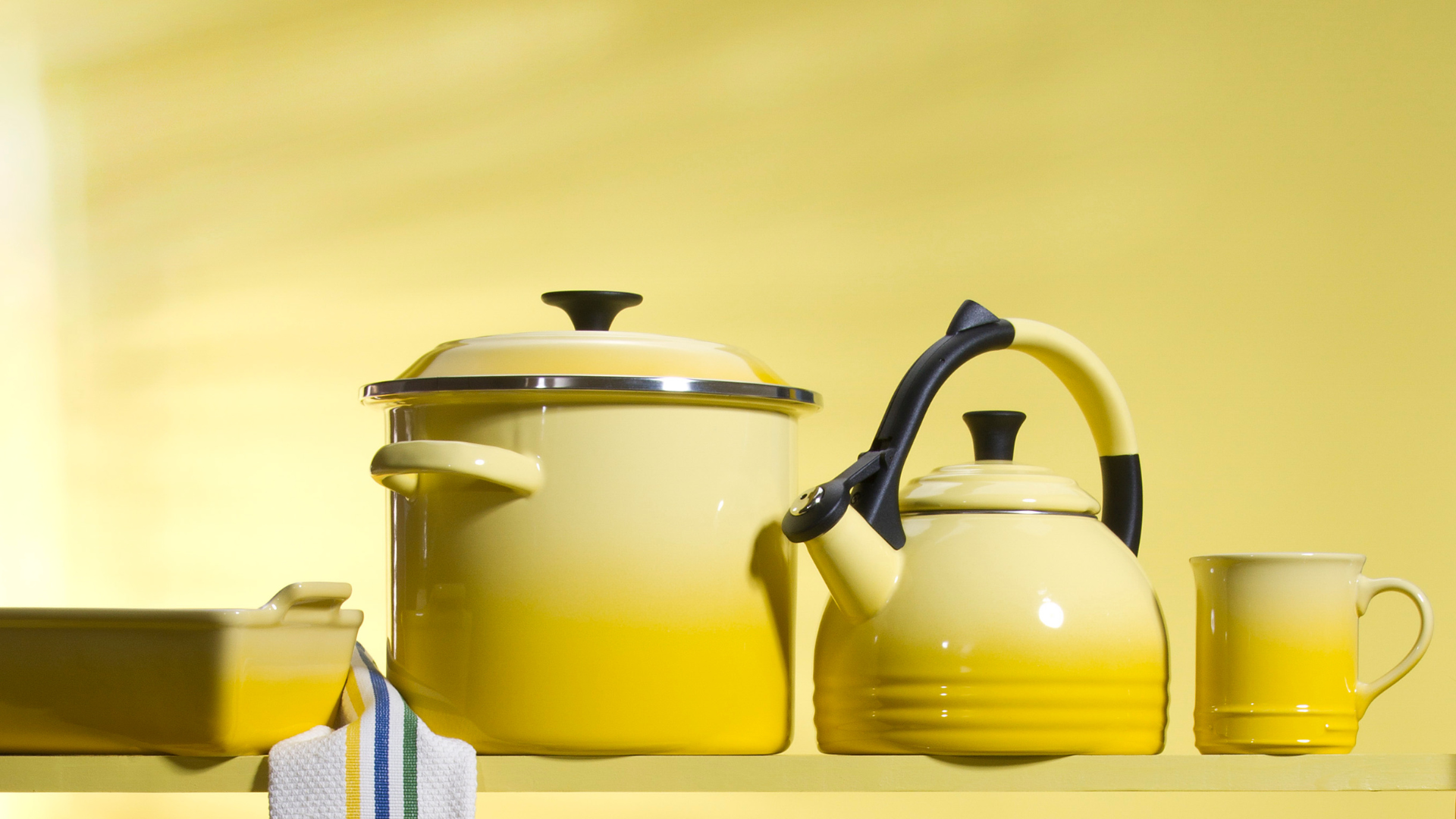
Are you thinking of making the switch away from forever chemicals? Forever chemicals have been around since the late 1930s, but it’s only in the last decade that we’ve really begun to realise the risks. With increased information and conversation around the issue, many households are more conscious of the chemicals in our products, the toxins they release, and are seeking more eco-friendly alternatives that don’t pose a risk to human health or our environment.
Next to cleaning, cooking is one of my great loves! So let’s begin!
Not all products are so easy to replace, though. We’re probably not about to surrender our iPhones, and we’re not about to pass on life jackets when needed. However, cookware is something that can be replaced. There are safer alternatives available, and since toxins released in cooking could leach into our food, replacing cookware that contains forever chemicals is a change worth making.
Greenwashing, false information and sneaky marketing though, are rife in the cookware market, and so it can be difficult to decode and discover what really is free from forever chemicals and what might still be harmful.
That’s why we’ve created this guide to the best forever chemical free cookware that doesn’t sacrifice quality cooking –
What are Forever Chemicals?
PFAS, also known as forever chemicals, are groups of synthetic chemicals that don’t break down naturally in the environment. This is problematic because they contain toxins that can interfere with hormones, reproduction, affect immunity and aid the development of certain cancers.
It’s important to note that we don’t know the extent of contamination, and we have little data on toxicity levels. Therefore, it’s difficult to say what the risks to human health really are either way.
Did you know that due to their water and grease resistance, forever chemicals (PFAS) are used in many everyday items? Including –
- Clothing – mostly in wetwear, workwear, wrinkle-free clothing and activewear
- Packaging – takeout containers, pizza boxes, cake boxes, etc
- Cosmetics – sunscreen, face creams, hair products, etc
- Electronics – to insulate wiring and components
- Cookware – frying pans, saucepans, particularly non-stick cookware
What Cookware Contains Forever Chemicals?
I was fascinated to learn that in 1938, Teflon was created (accidentally), and this was quickly applied in cookware as its non-stick ability made it highly effective for heating food without the need for so much oil. When food doesn’t stick to the pan, the washing up also becomes much easier. However, Teflon contains forever chemicals and these can be released into the air as it heats, can potentially wear down and end up in our food, and when these pans are cleaned, they can release these chemicals into the water system.
Aluminium and copper cookware do not contain forever chemicals (PFAS) but can be linked to potential health problems, as although the body needs some copper and aluminium, excessive levels can cause health problems, but we’ll get into this later. Now, let’s look at what non-stick cookware can be replaced with and what the pros and cons are to each –
What are the Best Non-stick Cookware Alternatives to Teflon?
Ok, so we know Teflon isn’t good for our health, and other non-stick coatings carry risks too, as they can break down over time. Not only can this get into our food, air and water, but the fact that they need replacing when the coating starts to degrade means they aren’t long-lasting, which is both bad for the environment and our finances.
The best cookware alternatives are generally more expensive – sorry – but they are built to last. I know this because my mother was determined to arm all the girls in my family with quality cookware when we left home, so she had a bottom drawer ready for each of us, and I still have one of those stainless steel pots she passed down to me. So, let’s begin with stainless steel, shall we? After all, it’s served me well.
Stainless Steel Cookware
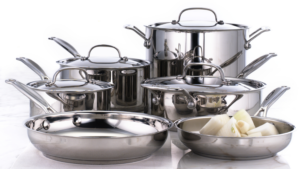
Stainless steel is beloved because it lasts forever. It is also rated highly by professional chefs because it’s great to cook with – once you’ve mastered it. Genuine stainless steel is free of forever chemicals. However, be mindful of hybrids that might have an added non-stick coating.
Since it isn’t non-stick, cooking with stainless steel does take a little time to perfect. As it absorbs heat so rapidly, cooking fats can brown and stick to the pan, making it difficult to move food around and even more challenging to clean. This is solved by choosing refined oils with a high smoke point. It’s also not necessary to turn the heat right up for the ideal sear; a medium heat is sufficient, and you should allow the pan to heat up slowly, as this will better enable it to maintain a consistent and even heat. To further prevent sticking, take food out of the fridge 30 minutes before cooking so it’s at room temperature when it enters the pan.
Stainless steel is versatile, attractive and durable. A highly worthy option for forever chemical free cookware.
Cast Iron Cookware
If there’s one word most associated with cast iron cookware, it would probably be ‘heavy’. And yes, this is the heaviest of our forever chemical free cookware contenders. However, it is virtually indestructible and offers superior heat retention, effective both for searing on the hob and for slow cooking in the oven. Cast iron is generally less expensive than stainless steel, and there’s something so traditional about a cast iron skillet, yet it also doesn’t look out of place in a modern kitchen setting.
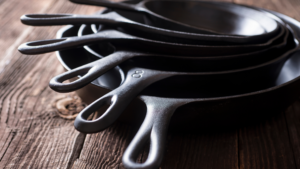
So, what’s the downside? Well, it’s not dishwasher safe, which won’t be a big deal for some, but for others, that will make cast iron cookware a non-starter. Given how heavy it is, you must also take care when using cast iron cookware on a ceramic or glass hob, lifting rather than dragging to avoid scratching the hob surface.
Ceramic Cookware
Made from ceramic clay which is shaped, fired and glazed, ceramic provides a smooth sliding surface, perfect for moving food around, meaning you can control temperature and keep food from sticking. Being lightweight, it’s also easy to handle, and it’s attractive.
Ceramic is usually dishwasher safe, though a soft sponge wash is usually sufficient and can protect the lifespan of your cookware. However, it is more sensitive than cast iron or stainless steel and can scratch and chip more easily. Therefore, I recommend washing ceramic pans by hand (it won’t take long since food doesn’t stick) and using pan protectors for storage.
Ceramic cookware varies in cost, but make sure that if you’re paying more, you’re paying for the quality of material and not just for aesthetics. Some manufacturers use a ceramic coating on metal pans and then market them as ceramic. These are not high quality, and they leach toxins.
One of my friends uses ceramic cookware with detachable handles, and attributes this to lengthening the lifespan of her pans, since this means fewer screws, less erosion, and allows for more thorough cleaning. It also enables her to transfer pans from the hob to the oven effortlessly.
Copper Cookware
If opting for aesthetics, you can’t get more beautiful cookware than copper. This gleaming metal shies short of fancy and is instead traditional and tastefully uncommon. It’s also a superb conductor of heat, although in a different way than cast iron.
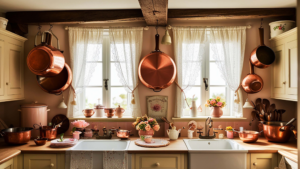
Whilst cast iron performs well when fully heated, because it retains heat so well, copper heats quickly and evenly but cools just as rapidly. Simply put, copper is responsive, which can be useful; when mixing a sauce, for instance, a pan that quickly adjusts to temperature changes can give you more control. This also works well for delicate produce, such as fish, when searing is desired but then a lower temperature to gently cook through is beneficial.
Copper can be a preferred choice for a cook who has the patience and knowledge to work with their cookware to control the heating and cooling process in a way that can produce food that is rich in flavour and still delicate in texture.
The key con of copper is that it’s expensive. If you’re seeking a non-toxic type of cookware, though, there are also other considerations. Copper cookware does not need forever chemical coatings, but it can release copper into our food and water system.
Whilst copper is naturally occurring in our bodies, and a little copper is essential, it can be toxic in excessive doses over time. Now, the small amounts that might be leached through cooking pans are yet unproven to cause significant health problems, but you could say the same for forever chemicals. So, if you’re looking to move away from forever chemicals in your cookware for health reasons, it’s worth looking into the potential risks of using copper cookware. At least exclusively. Another option is to opt for copper pans with a stainless steel base.
Looking After Your Cookware
Whatever cookware you choose, you’ll want it to be long-lasting, especially if it was expensive. If you can take good care of your cookware, you might even do like my mum and pass your pans down to your children when it’s time for them to set up their own home. So here are a few tips for extending the lifespan of your cookware –
- Cleaning Cookware – If you really want to look after your cookware, hand washing is best. Most pans can be cleaned with soap and water and a soft sponge. If food has stuck to the pan, opt for natural solutions like baking soda and an overnight soak. Resist the temptation to use steel wool or rough scouring pads, as these can wear away at the non-stick coating.
- Controlling Heat – Even the hardest-wearing, heat-resistant materials can be damaged by drastic temperature changes. Heating and cooling pans slowly can improve the quality of your cooking and protect your kitchenware. Also, resist plunging hot pans into cold water. Instead, leave them to cool to room temperature before soaking or cleaning them.
- Use the Right Utensils – Not all materials are good for one another. Metal utensils can work well on stainless steel and raw cast iron but can damage non-stick or ceramic cookware.
- Cookware Storage – Store cookware in a dry area at room temperature and use pan protectors if stacking. This can prevent scratching and keep the pan surface from eroding.
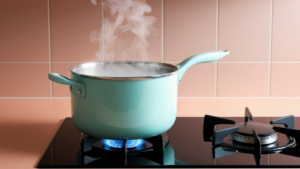
I would love to see us move away from forever chemicals in our cookware. Not only is it potentially harmful for those using it, but it also affects all of us, as broken-down Teflon gets into our water systems, impacting the health of us and the planet. I accept that it’s not easy, though. It can be expensive to replace cookware, so don’t feel you must do it all at once.
My hope is that this article has offered guidance on the pros and cons of alternative safe non-stick cookware and helps you navigate the misinformation and greenwashing when you do shop for good-quality planet- and human-friendly cookware. Still, make sure you do brand research before committing, and when you do decide on the right cookware for you, read those accompanying dull leaflets on looking after it – they can provide some good product-specific advice.
Let me know how you get on.